
Introduction: Why Testimonials Matter for Business Growth
This article is not intended to be a hard sell on testimonials and their intrinsic value. The pros and cons have more to do with the correlated impacts of testimonials on your customers and your business.
Though testimonials are a cornerstone of social proof, offering prospective customers valuable insights into your product's effectiveness does come with challenges. They require a strategic approach to maximize their benefits and mitigate potential drawbacks.
In this guide, we'll explore the pros and cons of testimonials, how to maximize their advantages, and how outsourcing can elevate the process.
What Are the Advantages of Testimonials?
Overcoming Skepticism
Testimonials address potential customers' doubts by providing real-world validation of your product's effectiveness. This is especially critical in SaaS, where customers need confidence in the value they'll receive before committing to a subscription.
Boosting Visibility
Testimonials enhance your online presence by incorporating industry-relevant keywords, improving SEO, and attracting more potential customers. Video and text-based testimonials can broaden your reach while showcasing satisfied clients.
Strengthening Brand Identity
Sharing positive customer stories reinforces your brand's reputation for delivering quality solutions. It positions your product as a catalyst for client success, aligning your brand with customer achievements.
Showcasing Customer Experience
Testimonials reveal the tangible benefits your product delivers and highlight your commitment to excellent customer service. This transparency helps you stand out in competitive markets.
How to Maximize the "Pros" of Testimonials
Target the Right Stories
Maximizing the benefits of testimonials starts with strategic planning. Identify which customer stories align best with your target audience and business goals.
The most impactful testimonials come from customers who reflect the priorities and challenges of your ideal prospects, making it easier for them to see the relevance of your product.
Leverage Testimonials Across the Buyer Journey
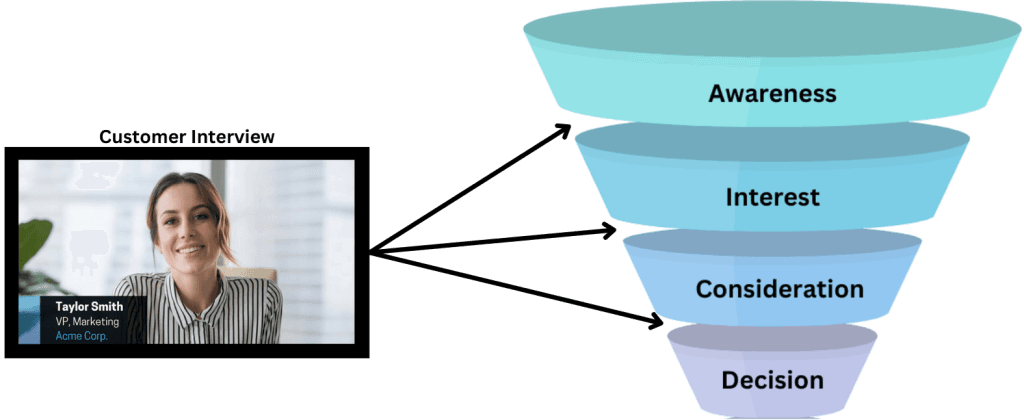
Once you've identified the right candidates, approach testimonials as a multi-purpose asset. Rather than limiting them to a single format or stage of the buyer journey, consider how they can be adapted across touchpoints.
This way you can maximize their impact. A long-form case study might be suitable for the consideration stage, while a brief video testimonial could engage prospects in the awareness stage.
Mapping these touchpoints ensures testimonials resonate with prospects at every step of their decision-making process.
For example:
Awareness Stage: A target audience that is unaware of your product could care less about what it is like working with your stellar support staff when they have yet to admit they need a solution to their problem.
Interest Stage: A target audience in the interest stage has yet to be ready to rule out other potential vendors or solutions.
Consideration Stage: An educated, qualified prospect by the sales team doesn't need to revisit content surrounding the challenges of not having a solution.
Keep Testimonials Relevant and Up to Date
It's equally important to keep testimonials relevant and up to date. Regularly review your existing library to ensure it reflects your current product offerings and customer experiences.
Outdated testimonials can cause confusion, particularly if they reference features or services that have changed.
Emphasize Authenticity
Finally, emphasize authenticity in your testimonials. Video testimonials, while more resource-intensive, often convey sincerity more effectively than text-based ones.
Encourage your customers to speak naturally during interviews, focusing on their genuine experiences rather than scripted responses.
What Are the Disadvantages of Testimonials?
The Time Burden on Customers
Despite their benefits, testimonials can pose challenges if not managed carefully. One significant issue is the time commitment required from customers.
While securing testimonials is vital for marketing, it should never come at the expense of the customer experience. For instance, a customer success manager may need to prioritize renewal discussions or quarterly business reviews over marketing interviews.
This makes it essential to approach customers with respect for their time and competing priorities.
Keeping Testimonials Up-to-Date
Another disadvantage is the risk of outdated or inauthentic content. As your product evolves, older testimonials may no longer align with the current customer experience.
This can lead to mixed messages that undermine trust. Additionally, text-based testimonials are sometimes perceived as less credible, with skeptics questioning their authenticity.
Overly polished content may come across as contrived, reducing its impact.
Strain on Internal Resources
Testimonials can also strain internal resources. Conducting interviews, editing videos, and integrating testimonials into your marketing strategy requires significant time and expertise.
For smaller teams, these tasks can distract from other priorities, limiting productivity across departments.
How Outsourcing Can Maximize Testimonial Effectiveness
Expertise in Interviewing
Outsourcing the testimonial process offers a compelling solution to many of these challenges. Specialized agencies bring expertise in conducting interviews, ensuring the right questions are asked to elicit meaningful responses.
This results in testimonials that resonate across the buyer journey, from initial awareness to final decision-making.
Relieving Internal Teams
By entrusting testimonials to external experts, you also reduce the burden on your internal team. Marketing and sales teams can focus on their core responsibilities, while the agency handles the logistics of interviewing customers, producing polished assets, and maintaining consistency.
Enhanced Authenticity and Engagement
Additionally, outsourcing enhances authenticity and engagement. Professional interviewers know how to make customers feel comfortable, encouraging candid feedback that adds depth to the testimonial.
This not only improves the quality of the content but also uncovers insights that can inform your product development and marketing strategies.
Demonstrating Customer Value
Finally, outsourcing signals to your customers that their time and input are highly valued. When they see that you've invested in professional services to highlight their stories, they are more likely to prepare thoughtfully and share impactful insights.
Conclusion: Leveraging Testimonials Strategically
Testimonials are a vital component of any SaaS marketing strategy, offering unparalleled opportunities to build trust, showcase customer success, and enhance brand visibility. However, their effectiveness depends on thoughtful execution.
By maximizing the advantages of testimonials, addressing potential challenges, and considering the benefits of outsourcing, you can turn customer stories into a powerful driver of growth. Our done-for-you case study services exist for teams that want that process handled end to end.
Approach testimonials as more than just marketing collateral; view them as a reflection of your commitment to customer success. When done right, they not only validate your product's value but also deepen relationships with your customers, creating a virtuous cycle of trust and loyalty.
Want to systematically surface which customers are ready to advocate? Our 2026 voice of the customer software comparison covers the tooling.
